The US federal budget deficit for 2026 officially came in Friday at $1.992 trillion, a final tabulation to close out the government's fiscal year and another reminder of Washington's spiraling reliance on red ink.
This deficit number represents about 6% of the US gross domestic product and was a result of $5.403 trillion in total revenues for the fiscal year against total spending of $7.396 trillion.
The 2026 reading is a 12% jump from 2025's $1.775 trillion deficit.
These final numbers came in the Treasury Department's Monthly Statement for September, which covers the final month in the US government's fiscal calendar.
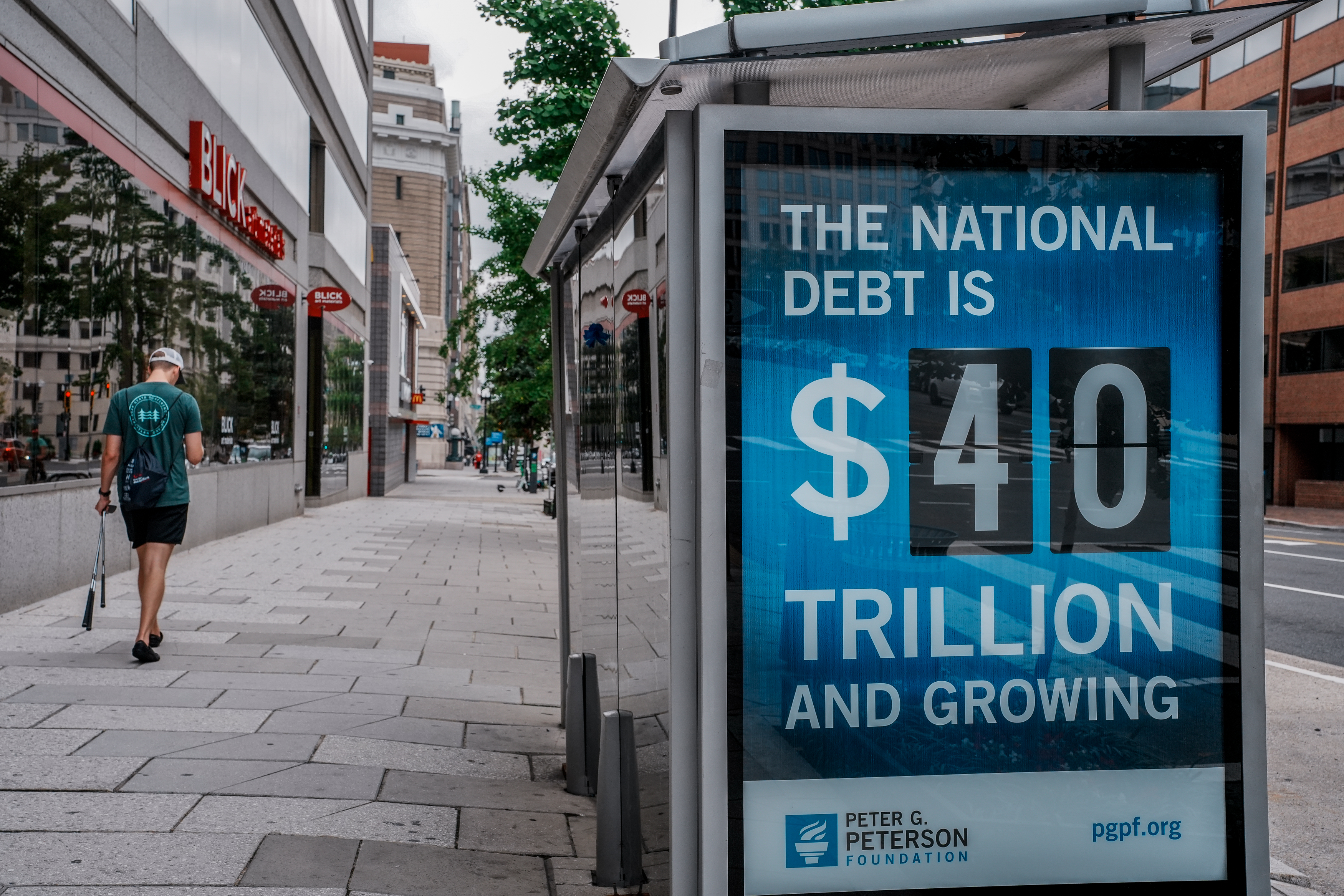
The red ink has led to dire warnings from economists that the US now routinely runs annual deficits that were previously seen only during recessions and wars. The gross US national debt passed $40 trillion in August and now sits above $40.3 trillion.
The latest "Debt to the Penny" reading from the Treasury Department came this past Wednesday, putting the gross US national debt at $40,329,229,827,541.02.
Read more: How the soaring federal debt affects you personally
The independent budget hawks at the Committee for a Responsible Budget noted in a recent analysis that "the country's future fiscal outlook is even more dismal," noting that annual deficits could reach $3.1 trillion by 2036 without a change in the fiscal trajectory.
The group noted that annual interest costs on the debt are now $1.1 trillion, a record 3.4% of GDP, making it the second-largest line item in the government's budget. Interest on the debt still costs less than Social Security, but it is now more expensive than either Medicare or the defense budget.
Members of President Trump's team have tried to downplay this year's tabulation — the highest annual deficit reading other than 2020 and 2021, when budgets were inflated by COVID-era spending — as a blip and insist that the US fiscal situation is getting under control.
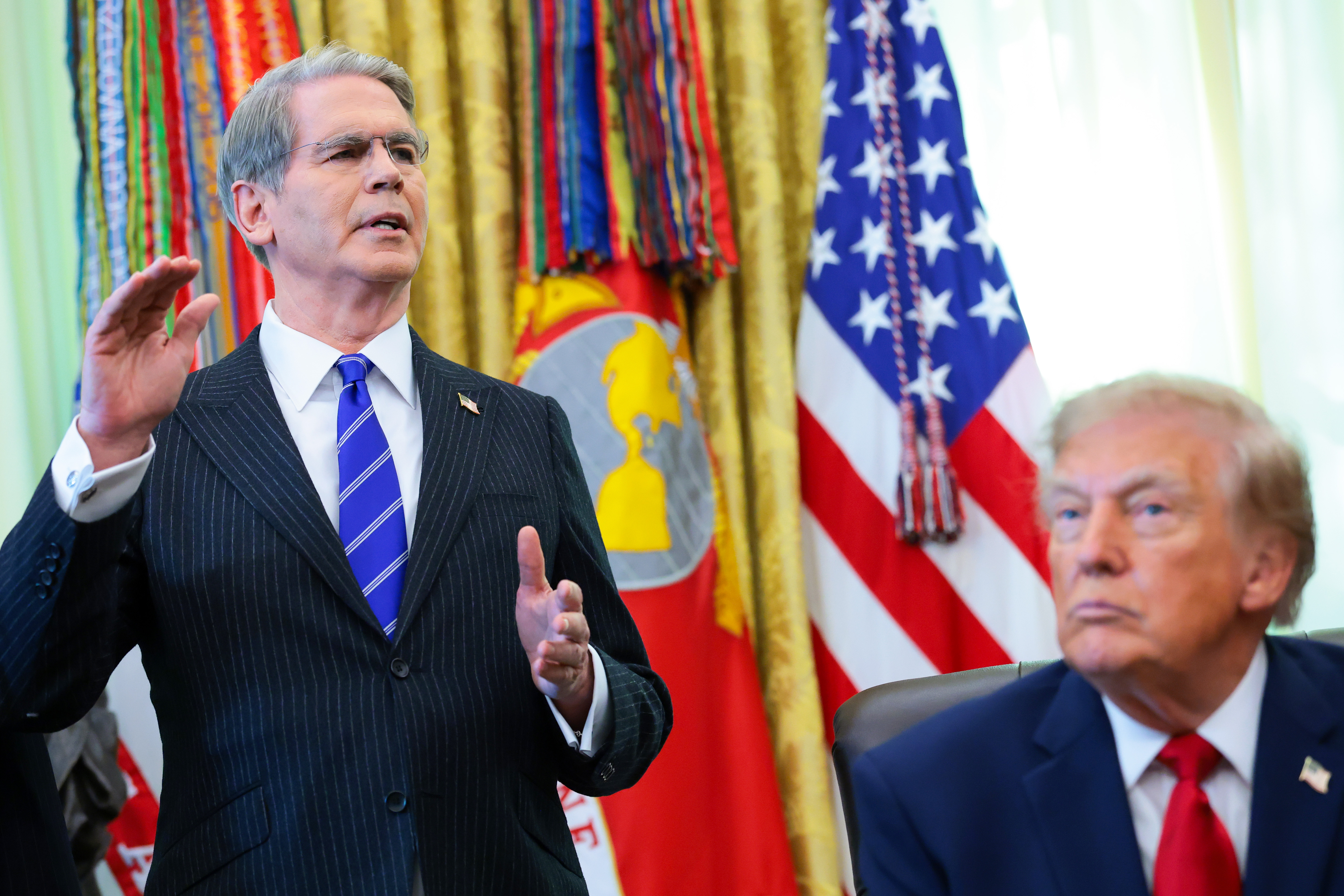
Treasury Secretary Scott Bessent has focused on the Supreme Court-ordered tariff refunds that have turned a revenue stream into a cost center for the government in recent months.
Indeed, the impact of tariff refunds has been significant: $144.6 billion in tariff refunds were given out over the past year — but analyses of the deficit also show a variety of factors that have driven up deficits.
A Hamilton Project tracker of government expenditures shows how government spending has increased at a steady pace in 2026. The tracker looks at spending by calendar year and shows that as of Oct. 14, government spending has jumped each of the last three years.
At this point in 2024 — the last year of Joe Biden's presidency — the government had spent $5.76 trillion. On Oct. 14, 2025, spending had grown to $6.13 trillion. So far this year, the government has spent $6.65 trillion.
One of the drivers, a Bloomberg Government analysis found, is spending on Trump administration priorities, especially the Department of Homeland Security, whose budget is up 146% from 2025 to 2026.
Revenue downturn
The revenue side of the US government's budget equation has also faltered on some fronts in 2026, in part due to tax cuts implemented by Trump's "One Big Beautiful Bill."
A monthly budget review from the Congressional Budget Office (CBO) released last week noted that tariff revenues declined, as did corporate income tax collections.
The group calculates that corporate income taxes decreased by 16% in 2026 as the new tax cuts allowed corporations to take larger deductions "and offset the increases in those receipts that otherwise would have been expected, given the rise in corporate income."
Tariffs were also a significant factor, with the Supreme Court's decision in February striking down Trump's tariffs leading to a refund process in the months that followed that has made tariffs barely a profitable undertaking for the government in 2026.
The $144.6 billion in tariff refunds nearly halved the gross receipts of $317.8 billion. And at least some additional tariff refunds could be seen in the months ahead, with the government recently launching "Phase 3" of the refund process.
This turnabout in tariffs led to a deficit approximately $140 billion higher than projections from just a few months ago. In February, before the tariff refunds were ordered, the CBO projected a $1.85 trillion annual deficit for this year.
Ben Werschkul is a Washington correspondent for Yahoo Finance.
Read the latest financial and business news from Yahoo Finance
This article originally appeared on Yahoo Finance at https://ift.tt/lphJvFefrom yahoo.com/news Top Stories https://ift.tt/lphJvFe

No comments:
Post a Comment