Tuesday, September 22, 2026

Autumnal equinox marks the start of fall, but heat could stick around

Our long, hot summer is finally coming to an end this evening with the autumnal equinox, which marks the beginning of fall here in the Northern Hemisphere.

At a precise moment each September, usually on the 22nd or 23rd, the sun is directly above the equator, marking the autumnal equinox in the Northern Hemisphere.

(South of the equator in the Southern Hemisphere, it's known as the vernal or spring equinox and marks the beginning of spring.) 

But what weather will the U.S. see this fall, given the record hot August and a forecast that calls for El Niño to peak either in late fall or early winter?

Read on for the forecast and also a look back at some of the statistics that made the three-month summer so remarkable.

What time is the autumnal equinox?

The exact time of the equinox is 8:05 p.m. ET. The equinox occurs at the same moment worldwide.

The word equinox comes from the Latin words "aequalis" and "nox," meaning equal night. On the autumnal (and the spring) equinox, day and night are both roughly 12 hours long in most of the world.

This will be true Sept. 22 from as far north as Utqiagvik (formerly Barrow), Alaska – north of the Arctic Circle – to as far south as Wellington, New Zealand, the world's southernmost capital city.

Earth's tilt leads to the Northern and Southern Hemispheres receiving changing amounts of sunlight over the course of the year, this NASA graphic illustrates. During the equinoxes in fall and spring, neither hemisphere is more tilted toward the Sun, so both receive the same amount of sunlight.

Day and night aren't exactly 12 hours long on the day of the equinox because the Earth's atmosphere refracts, or bends, light in an optical illusion that brings more daylight than there really is. Because of this, the date when day and night are of equal length is usually a few days after the autumnal equinox.

Astronomical fall vs. meteorological fall

Although some people say the autumnal equinox is the "official" start of fall, no administrative or political organization actually designates that.

In fact, though astronomers say summer ends Sept. 22, meteorologists and climatologists say summer ended Aug. 31, the final day of the three hottest months of the year (June, July and August).

Meteorological seasons are grouped by three months and closely follow the calendar, while astronomical seasons are defined by two solstices and two equinoxes based on the Earth's position around the sun.

Cooler temperatures? Maybe, but warmer than normal

If you were looking forward to cooler temperatures this fall, you might be disappointed. Thanks to a combination of El Niño and climate change, there’s a high likelihood for warmer than normal temperatures to continue this fall, said Zach Labe, climate scientist at Climate Central.

"The summer that is just ending was one for the record books, with record ocean heat, the warmest month recorded globally," Labe said. "And extremes like these could be just the beginning."

Worldwide, August was the warmest on record for land and ocean temperatures combined and the August average in the U.S. set records in terms of maximum, average and minimum temperatures, Labe said.

Much of the country is forecast to see warmer than normal temperatures this fall, according to the forecast from the National Oceanic and Atmospheric Administration.

"El Niño is all about redistributing heat," so the heat comes from the ocean and is transferred into the atmosphere, Labe said. That’s why El Niño years often add an additional boost to global temperatures.

Through August, the average temperature in 2026 has been the warmest on record in the contiguous United States, and Arizona, California, Colorado, Montana, Nevada, New Mexico, Oklahoma, Texas, Utah and Wyoming each had their warmest start to the calendar year on record, he said.

Even though we’re likely to hear more and more about warm temperature records being broken, "it’s not really El Niño that is breaking those records," Labe said. "It's human-caused climate change. That's what's driving the long-term trend."

A study by Climate Central found that since 1970, the average number of warmer-than-normal fall days has increased in 98% of the 245 cities analyzed in the United States.

Federal forecasters expect El Niño to peak later this fall and to be one of the strongest El Niño events on record, "but that doesn't always necessarily mean stronger impacts," Labe said. "Every El Niño has its own flavor. Each one is different. And so that's really important to keep in mind."

Doyle Rice and Dinah Voyles Pulver are national correspondents for USA TODAY focusing on weather and climate. Reach them at drice@usatoday.com and dpulver@usatoday.com.

This article originally appeared on USA TODAY: Autumnal equinox marks start of fall, but heat could stick around

This article originally appeared on USA TODAY at https://ift.tt/Tgpk8qG

from yahoo.com/news Top Stories https://ift.tt/Tgpk8qG

Appeals court orders Missouri to use GOP-friendly map as Supreme Court fight looms

Protesters against Missouri's congressional redistricting plan gather outside the Missouri Capitol in Jefferson City on May 12. - David A. Lieb/AP/File

A federal appeals court ruled Monday that Missouri must use a GOP-friendly congressional redistricting plan for November’s election but put that ruling on hold for a week so the Supreme Court could review the dispute.

The ruling from the US 8th Circuit Court of Appeals is the latest twist in a whiplash legal wrangling over the map of the state’s eight congressional districts, injecting another round of uncertainty, as it does not take effect immediately but rather sets up another round of appeals.

The Missouri Supreme Court previously said the 7-1 Republican-leaning map adopted by the legislature last year could not be used because of a referendum challenge brought against it under the state constitution. Instead, the court ordered election officials to use an older, 6-2 redistricting plan even though the 2025 plan had been used in the state’s primary. The US Supreme Court declined to reverse that ruling, and it then paused a federal judge’s ruling that sought to revive the 7-1 map.

The new ruling from the 8th Circuit said requiring voters to cast general election ballots on the older plan violates the US Constitution.

It relied on estimates put forward by a conservative group in the case to conclude “that more than 1.4 million Missourians could not vote for the congressional district nominees who will appear on their November 2026 general election ballot, and more than a quarter-million Missourians who voted in the August 2026 primary election cast a vote for a congressional district candidate who now cannot represent them.”

Rep. Emanuel Cleaverspeaks during a rally on February 10, 2025 in Washington, DC. - Jemal Countess/Getty Images/File

Missouri’s new map targeted the 5th Congressional District, held by Democratic Rep. Emanuel Cleaver, by breaking up its Kansas City base and stretching it into rural and Republican-leaning parts of the state.

The group that launched the referendum campaign against the GOP-leaning map noted in a statement reacting to the new ruling that “Ballots have been printed, and Missourians have already voted.”

“Thousands more will vote before this order seeks to take effect,” the statement from People Not Politicians said. “Officials should stop wasting taxpayers’ money on pointless legal action and instead focus on administering our elections.”

This story has been updated to correctly reflect the number of congressional districts in Missouri.

CNN’s Fredreka Schouten and John Fritze contributed to this report.

For more CNN news and newsletters create an account at CNN.com

This article originally appeared on CNN at https://ift.tt/q5mCzh1

from yahoo.com/news Top Stories https://ift.tt/q5mCzh1

Trump and Xi meet in D.C. this week with tariffs and AI expected to be at center of talks

President Trump meets later this week with Chinese President Xi Jinping, and observers are hoping for incremental progress on key issues.

But don't expect major policy breakthroughs.

On trade, there is a hope that the current truce between the US and China could be formally extended and some concessions negotiated, as Trump has delayed making new tariff provocations.

Meanwhile, on artificial intelligence, there is little expectation for any agreement around scaling back the rapid pace of developing frontier AI models but hopes for increased communication. Treasury Secretary Scott Bessent said Sunday that preliminary talks had focused on a possible "notification mechanism between the two countries" around AI.

A senior US official confirmed that both AI and trade were on the agenda for the talks but made clear how much is up in the air, suggesting to reporters on Friday that no agreements had been reached in advance.

"We'll know more once the two leaders meet," the official said.

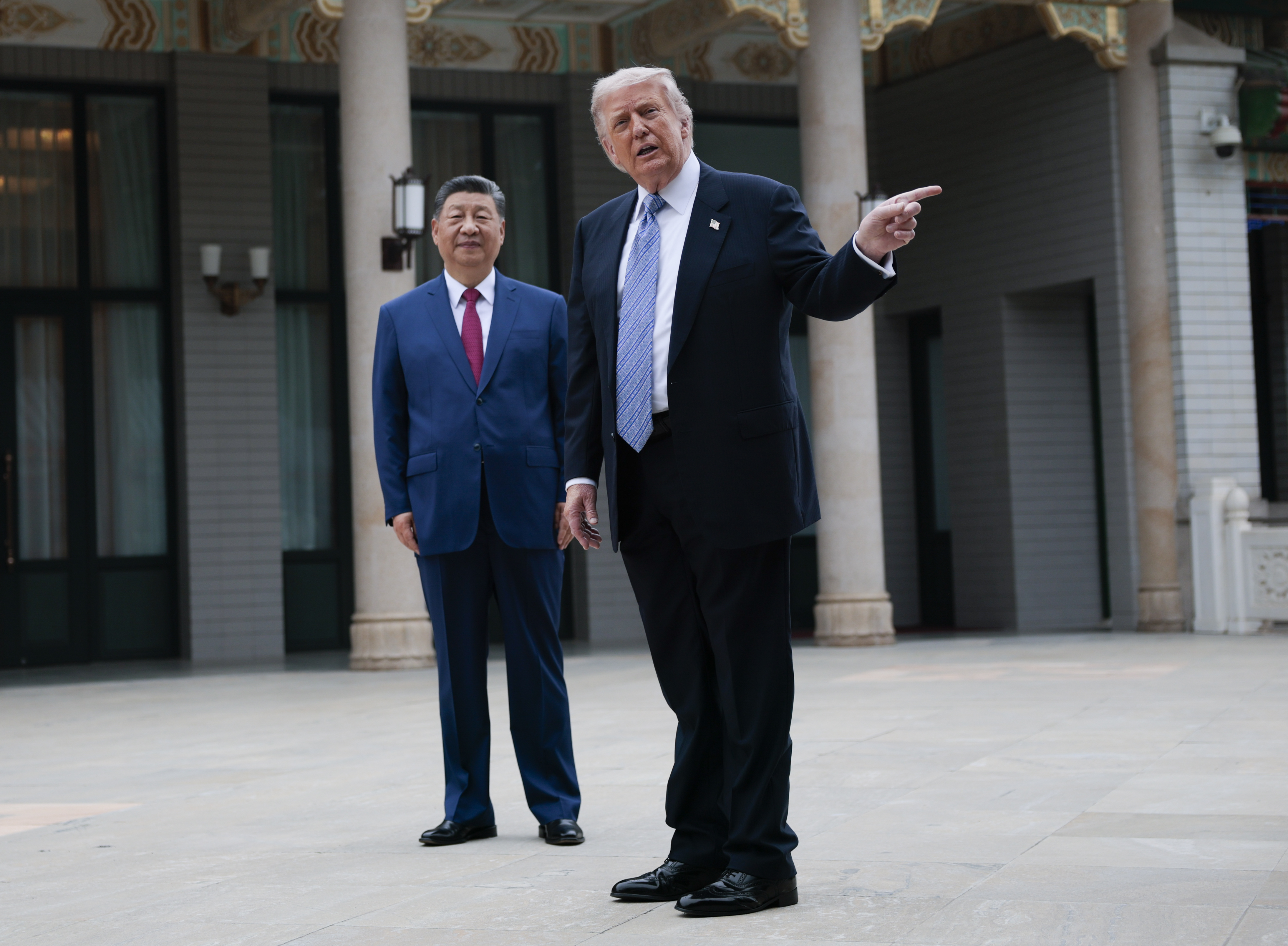
BEIJING, CHINA - MAY 15: U.S. President Donald Trump gestures as Chinese President Xi Jinping looks on during a tour of Zhongnanhai Garden on May 15, 2026 in Beijing, China. Trump and other U.S. officials are finishing up a visit intended to address the Iran conflict, trade imbalances, and the Taiwan situation while establishing new bilateral boards for economic and AI oversight.  (Photo by Evan Vucci-Pool/Getty Images)
President Donald Trump and Chinese President Xi Jinping during a tour of Zhongnanhai Garden in China in May. (Evan Vucci-Pool/Getty Images)
China Pool via Getty Images

The week ahead could also be a ripe one for dealmaking. CEOs from both nations are set to be on hand, including a number of big names from the US side — from Jeff Bezos of Amazon (AMZN) to Elon Musk of Tesla (TSLA) and SpaceX (SPCX) to Jensen Huang of NVIDIA (NVDA) to Sam Altman of OpenAI (OPAI.PVT) and more.

Trump touted the planned state dinner and lamented that it would take place in the East Room of the White House (instead of in his still under construction ballroom). He said only about 125 people will be in attendance, calling it "a very tough ticket."

Yet for all the pomp and circumstance, there is a sense that less news might be made on the policy front.

"My shorthand for describing the current dynamic is managed stalemate," said Craig Singleton, a senior fellow at the Foundation for Defense of Democracies and a former US diplomat.

Singleton says Trump is aiming to stage a visit that equals his own highly choreographed visit to Beijing earlier this year, and "the style will almost certainly be more impressive than the substance."

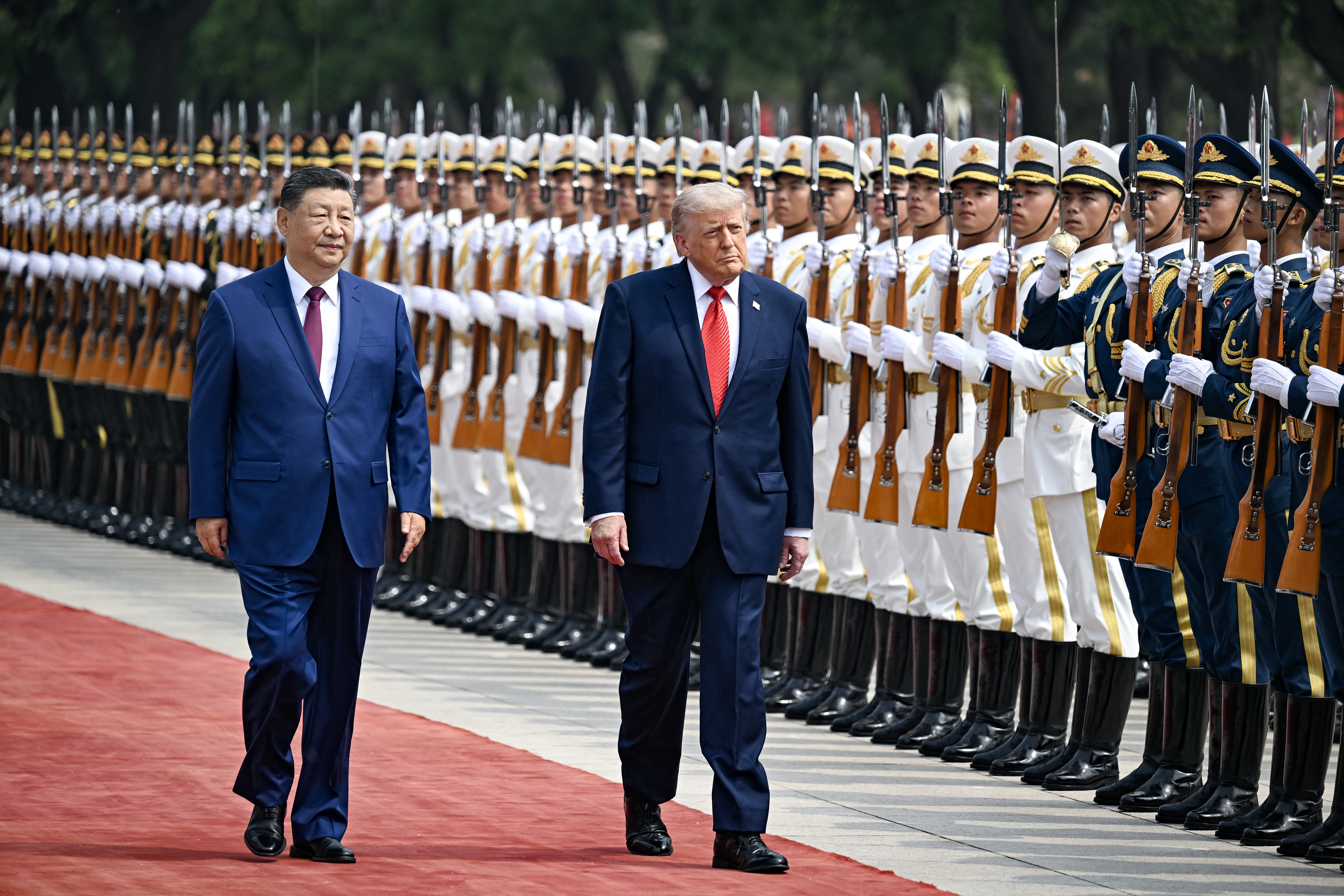
US President Donald Trump (R) and China's President Xi Jinping inspect a guard of honour during a welcome ceremony at the Great Hall of the People in Beijing on May 14, 2026. (Photo by Kenny HOLSTON / POOL / AFP via Getty Images)
President Donald Trump and China's President Xi Jinping inspect a guard of honour during a welcome ceremony at the Great Hall of the People in Beijing on May 14, 2026. (Kenny HOLSTON / POOL / AFP via Getty Images)
KENNY HOLSTON via Getty Images

AI and trade are just a few issues to watch, with the talks between the world's two largest economies also expected to touch on the status of Taiwan, export curbs on rare earth minerals, the war in Iran, and recent currency developments around the Chinese Yuan after Secretary Bessent called the Chinese currency undervalued.

Three days of events are scheduled, beginning on Wednesday in Washington after Trump makes a trip to New York early this week for the UN General Assembly.

An airport arrival ceremony is planned Wednesday, a bilateral meeting and state dinner Thursday, and then a tour of the US National Archives on Friday before Xi's departure.

A key theme of the visit — which has been elevated by a growing focus on the issue — is AI.

Trump has staked out a China-focused stance, often saying that the US needs to pull out all the stops to win on AI. On Saturday, he announced plans for an "AI force" to oversee the technology that he was quick to note "will not in any way hinder or stifle the Growth of this incredible Industry."

China has likewise signaled it has little interest in slowing down.

Against that landscape, Kevin Allison of the Center for European Policy Analysis said it's hard to see much beyond a pro forma agreement on AI emerging this week, though communication could improve. 

In "an optimistic case, you might have a framework for future discussions," Allison said.

He said a hotline is in place to discuss these topics, but a problem in the past has been that "the Chinese don't answer it."

Bessent said the US proposed a notification mechanism between the two countries because "we want a shared vision." He did not say how the Chinese reacted to the idea.

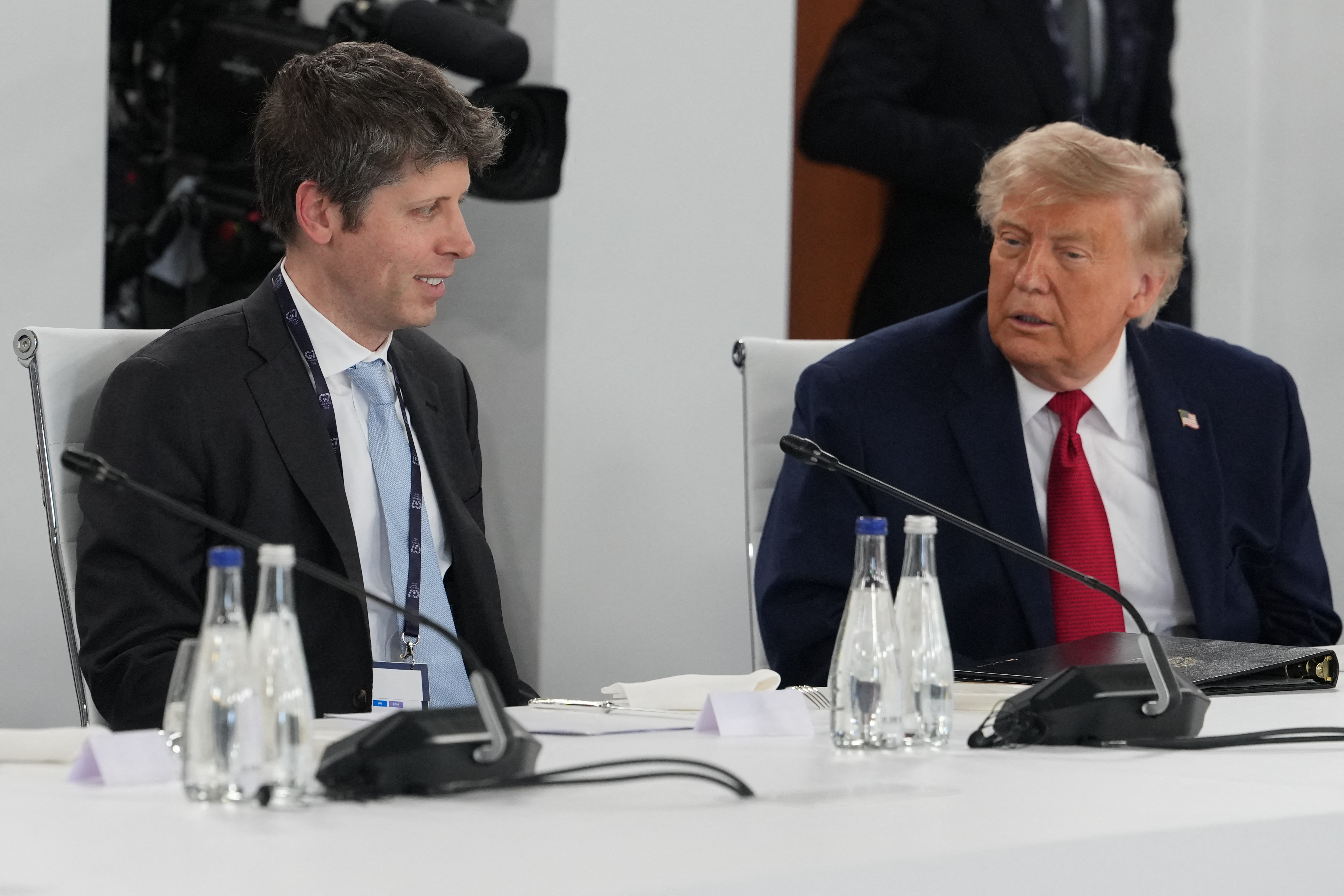
US President Donald Trump (R) and Open AI CEO Sam Altman (L) react during a working lunch meeting of G7 members, partner countries, and artificial intelligence business leaders as part of the G7 summit, in Evian, eastern France, on June 17, 2026. A G7 summit is set to take place June 15 to 17 in the French town of Evian-les-Bains near Switzerland and it will be attended by country leaders as well as the EU's foreign policy chief and ministers from Brazil, Canada, the United Arab Emirates and Turkey. (Photo by Julia Demaree Nikhinson / POOL / AFP via Getty Images)
President Donald Trump and Open AI CEO Sam Altman are seen during meeting of artificial intelligence business leaders as part of a G7 summit France in June (Julia Demaree Nikhinson / POOL / AFP via Getty Images)
JULIA DEMAREE NIKHINSON via Getty Images

The overall mood is expected to be full speed ahead on AI from both sides, underlined by the attendance of Huang at the state dinner as well as former Trump AI czar David Sacks, who NBC reported is also set to attend.

Huang and Sacks have been allied with Trump on pushing back on the need for new AI regulations.

Huang took a call from the president onstage at a conference last week, allowing Trump to tell the assembled audience that "the robots are not going to be taking over the world." Huang then chimed in and said, "We don't need any new laws."

The expectations on the tariff front have shifted in a de-escalatory direction, as importers pin hopes on a formal extension of the bilateral trade truce that expires in November.

That sense of guarded optimism was helped by the Trump administration making clear it wasn't likely to hike up tariffs on the eve of Xi's visit.

It was just a few weeks ago that Trump had been seen as likely to move forward with, but with the midterms looming the focus has more recently shifted to limited possible tariff cuts. 

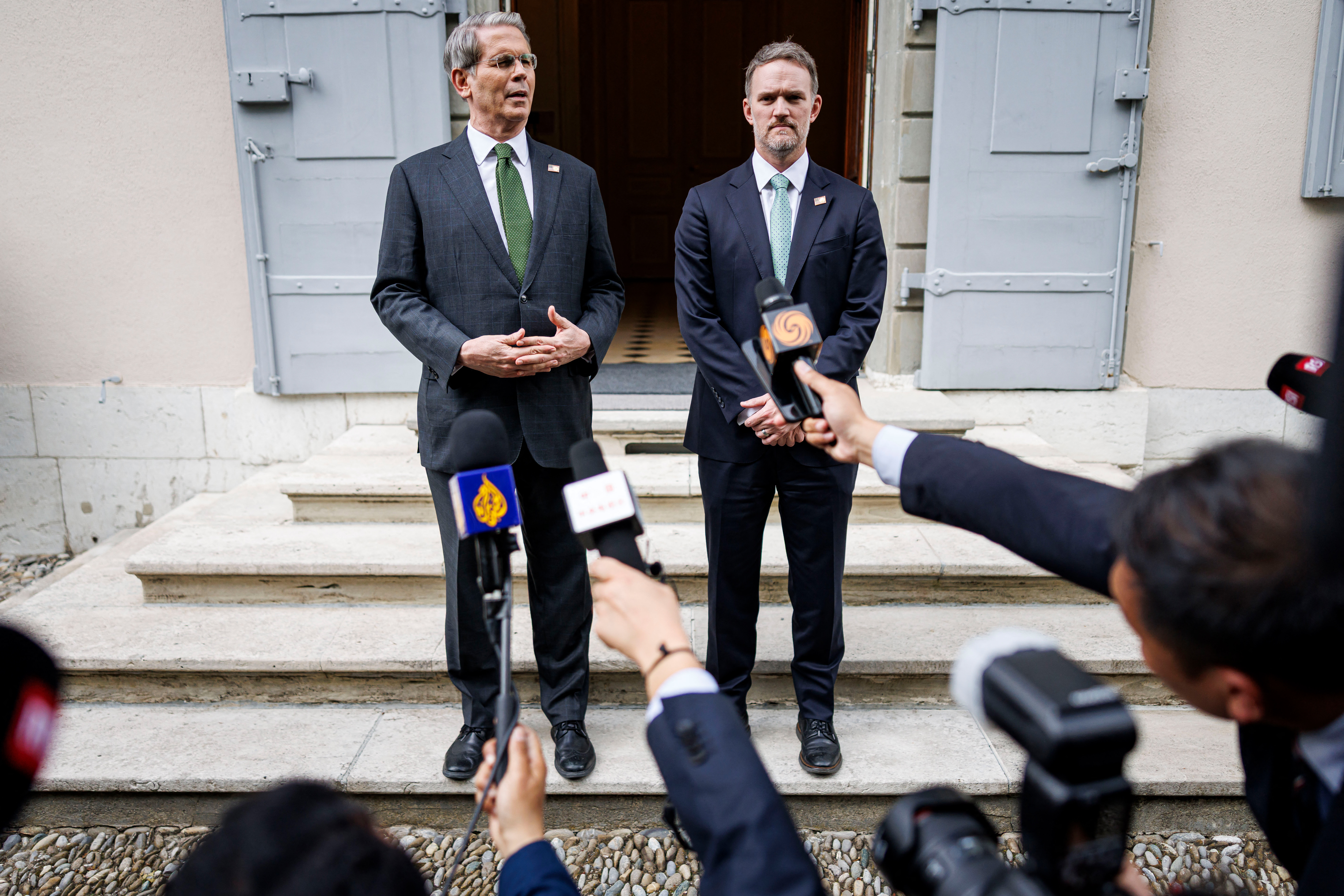
US Treasury Secretary Scott Bessent (L) and US Trade Representative Jamieson Greer speak to the media after talks between seniors US and Chinese officials on tariffs at the residence of the permanent Swiss ambassador to the United Nations in Geneva on May 11, 2025. US officials voiced optimism on May 11, at the end of a weekend of trade talks with China aimed to de-escalate trade tensions sparked by President Donald Trump's aggressive tariff rollout. (Photo by VALENTIN FLAURAUD / AFP) (Photo by VALENTIN FLAURAUD/AFP via Getty Images)
Treasury Secretary Scott Bessent and US Trade Representative Jamieson Greer are seen during talks with Chinese officials on tariffs in Geneva in May. (VALENTIN FLAURAUD/AFP via Getty Images)
VALENTIN FLAURAUD via Getty Images

Both the US and China are eager to show progress on the "Board of Trade" announced earlier this year. Bloomberg reports that one plan could cut duties on Chinese inputs for manufacturers in return for some concessions from China.

A US official said discussions were already underway on some tariff relief on a "narrow band" of less sensitive goods, which could be finalized this week.

The framework to judge the trade talks is not whether any major new agreements are struck but "whether China demonstrates measurable progress on its previous commitments," Andrew Harding recently wrote for the Heritage Foundation.

Xi's government reportedly has plans for several top business leaders to join him alongside the large US delegation.

The full list of CEOs and former CEOs the White House has confirmed includes Jeff Bezos of Amazon (AMZN), Sundar Pichai of Google (GOOG), Michael Dell of Dell Technologies (DELL),  Jane Fraser of Citigroup (C), and Tim Cook of Apple (AAPL).

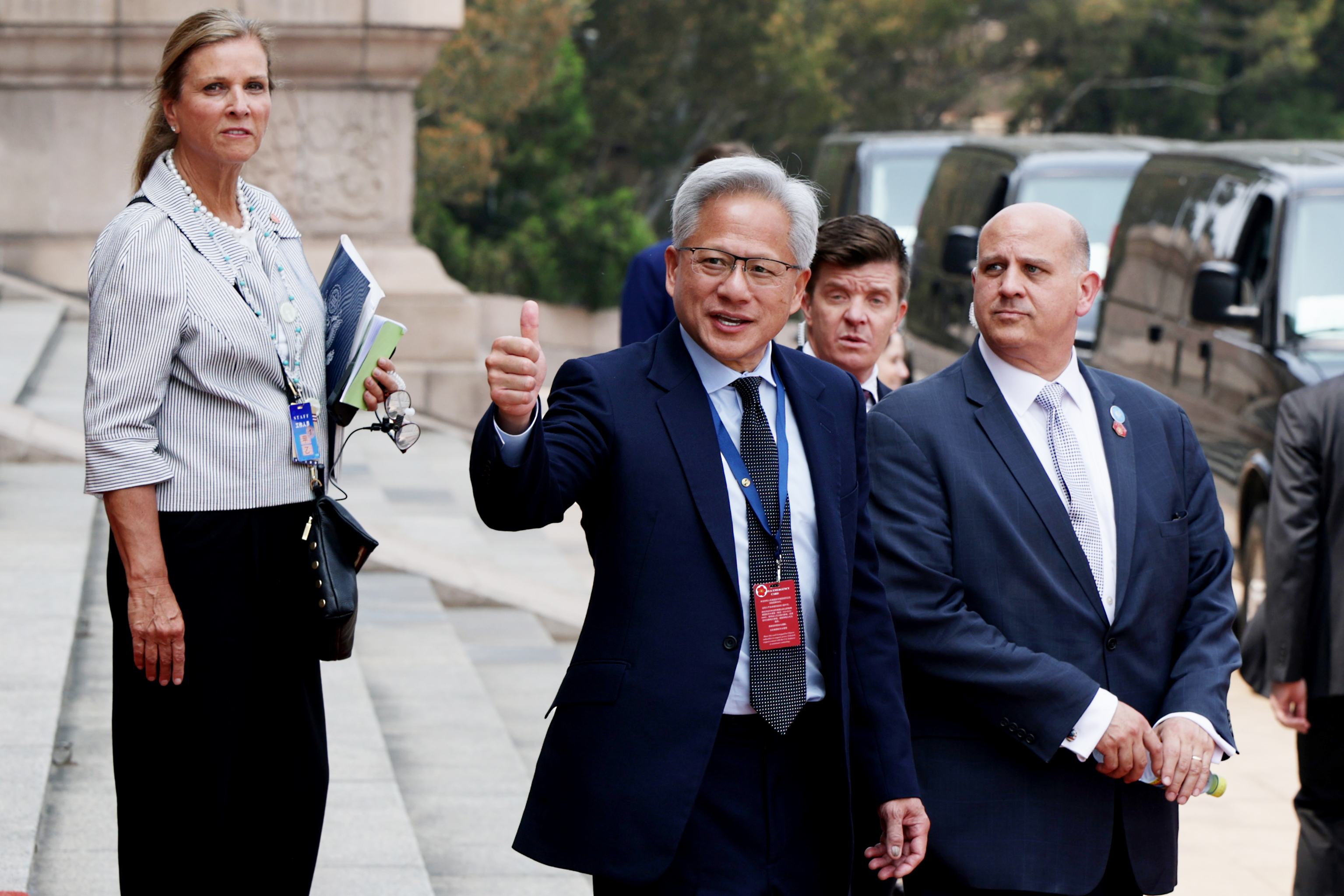
BEIJING, CHINA - MAY 14: Nvidia CEO Jensen Huang (C) gestures as he prepares to depart following a welcome ceremony at the Great Hall of the People on May 14, 2026 in Beijing, China. President Trump is meeting with President Xi Jinping in Beijing to address the Iran conflict, trade imbalances, and the Taiwan situation while establishing new bilateral boards for economic and AI oversight. (Photo by Alex Wong/Getty Images)
Nvidia CEO Jensen Huang following a welcome ceremony at the Great Hall of the People on May 14 in Beijing with President Trump Chinese President Xi Jinping. (Alex Wong/Getty Images)
Alex Wong via Getty Images

Executives from electric carmaker BYD could also be in attendance, the South China Morning Post reports. The company is effectively banned from selling cars in the US, but Trump raised eyebrows by suggesting an openness to change, which led to protests from US automakers. 

"If China wanted to come in and open a plant to build their cars here, I'd be okay with that," Trump told Fox News. "What I don't want is them to build in Mexico and just build it inexpensively and ship it across the border."

Ben Werschkul is a Washington correspondent for Yahoo Finance.

Click here for political news related to business and money policies that will shape tomorrow's stock prices

Read the latest financial and business news from Yahoo Finance

This article originally appeared on Yahoo Finance at https://ift.tt/XVLJp07

from yahoo.com/news Top Stories https://ift.tt/XVLJp07

Monday, September 21, 2026

Developing Nor'easter to batter East Coast with strong winds, flooding and dangerous surf

THE TAKEAWAY

  • A developing week-long nor’easter is forming and will bring days of high surf, strong winds, coastal flooding and severe beach erosion to the East Coast.
  • Some areas could experience wind gusts up to 60 mph, with offshore waves reaching 15 to 18 feet.
  • The FOX Forecast Center said multiple days of continuous pounding waves will severely impact beaches.

A powerful, week-long nor’easter is taking shape along the East Coast, bringing days of high surf, strong winds, coastal flooding and severe beach erosion before the storm eventually tracks northward.

Powerful Monsoon To Reignite Over The Southwest, Four Corners Following Day Of Intense Flooding That Killed 3

The system will begin developing Monday and continue through the weekend as a sharp fall cold front pushes off the coast while strong high pressure builds to the north.

Strong northeasterly winds will develop across the offshore and coastal waters, producing powerful wind gusts.

Seas will rise rapidly, creating heavy surf and dangerous, battering waves along exposed beaches.

7 Facts You Should Know About Flash Floods

According to the FOX Forecast Center, persistent onshore winds will remain locked in through multiple high-tide cycles, allowing waves to relentlessly pound the base of coastal dunes.

Significant beach erosion and dune scarping will develop from the Outer Banks through the Mid-Atlantic and Long Island as the surface low-pressure system forms.

Home collapses in North Carolina
Home collapses in Buxton, N.C. on Sept. 30, 2025.

The FOX Forecast Center said moderate coastal flooding is expected during high tides, particularly in vulnerable back bays and low-lying coastal roadways.

How To Watch Fox Weather

The Outer Banks are forecast to see major coastal flooding, extreme surf and heavy, continuous rain. Some areas could experience wind gusts of 40 to 50 mph, with offshore waves reaching 15 to 18 feet.

The region will also see widespread rainfall, although widespread flash flooding is not currently forecast.

However, pounding waves across multiple high-tide cycles could lead to coastal flooding and severe beach erosion.

North Carolina Department of Transportation crews work to clear sand from Highway 12 on Hatteras Island, North Carolina on Saturday, Oct. 12, 2025.

Ocean overwash onto coastal roadways, including Highway 12, is expected, potentially creating scenes similar to major coastal events seen last year.

By Thursday and Friday, the surface low-pressure system will strengthen off the Southeast and Mid-Atlantic coasts, causing onshore winds to intensify.

What Is Coastal Erosion And Why Is It Dangerous?

Water will become trapped in back bays, creating consecutive high-tide cycles and preventing water from fully draining during low tide.

Eventually, elevated tidal flooding could spread across North Carolina, Virginia, Maryland, Delaware and New Jersey, extending into southern New England.

What Is A Heat Dome And How Can It Affect You?

The FOX Forecast Center said multiple days of continuous pounding waves will severely impact beaches. Dune washouts and damage to oceanfront boardwalks and coastal infrastructure will become increasingly likely across Mid-Atlantic and Long Island beaches.

Compounding tidal flooding and heavy wave action will also begin to impact the southern half of North Carolina.

JERSEY CITY, NJ - OCTOBER 12: Raindrops form on the top of a monument in front of the skyline of lower Manhattan and One World Trade Center as a nor'easter storm moves into New York City on October 12, 2025, as seen from Jersey City, New Jersey.
Raindrops form on the top of a monument in front of the skyline of lower Manhattan and One World Trade Center as a nor'easter storm moves into New York City on October 12, 2025, as seen from Jersey City, New Jersey.

Wind gusts along immediate coastal areas could reach 40 to 50 mph, pushing ocean water inland.

By Saturday and Sunday, the low-pressure center is expected to track north toward the I-95 corridor and New England, solidifying the nor’easter.

As the strengthening system tracks into or near New England, the strongest pressure gradient will impact the region, including Boston.

NEW YORK, NEW YORK - OCTOBER 13: People walk over the Brooklyn Bridge in the rain as New York City experiences wind and rain associated with a nor’easter storm moving through the region on October 13, 2025 in New York City. While New York City experienced only light rain and wind, thousands of residents in parts of New Jersey and Connecticut were without power. The storm caused New York City officials to cancel the annual Columbus Day Parade. (Photo by Spencer Platt/Getty Images)
People walk over the Brooklyn Bridge in the rain as New York City experiences wind and rain associated with a nor’easter storm moving through the region on October 13, 2025 in New York City.

However, the FOX Forecast Center said there are a few scenarios that could unfold as the storm moves north.

One scenario is if the low shifts closer to Boston. This could turn the storm into a major weather event, featuring 60 to 70 mph wind gusts, heavy rainfall, major storm surge and significant disruptions to Boston Harbor and the Massachusetts coastline.

How High Pressure And Low Pressure Drive The Weather

On the other hand, if the low shifts closer to New Jersey or Long Island, the strongest impacts could shift farther south, potentially putting New York City on the fringe of the storm.

Finally, if the low remains offshore, coastal New England could still experience rough surf, elevated tides and breezy conditions, while the heaviest rain and strongest winds remain displaced to the south and east over open water. The FOX Forecast Center said this scenario is appearing less likely.

What is certain, according to the FOX Forecast Center, is that wind gusts could reach over 60 mph as the peak of the storm shifts into southern New England, Massachusetts Bay and the Gulf of Maine.

FILE: A person wearing a rain poncho struggles with their umbrella in the Brooklyn borough of New York City.
A person wearing a rain poncho struggles with their umbrella in the Brooklyn borough of New York City.

Some areas could see waves reaching 15 to 18 feet along the coast.

Peak onshore winds, high astronomical tides and trapped coastal water will create the greatest risk for significant coastal inundation and structural flooding along east-facing shores, including Boston Harbor, Cape Cod and the north and south shores.

Powerful Waves Batter Southern California Coast, Damaging Homes And Triggering Sinkhole

Officials said dangerous seas, extreme rip currents and massive swells will make ocean waters extremely dangerous.


Original article source: Developing nor’easter to batter East Coast for days with strong winds, flooding and dangerous surf

This article originally appeared on Fox Weather at https://ift.tt/QIyBurD

from yahoo.com/news Top Stories https://ift.tt/QIyBurD

U.S. and China discuss new AI safety plan ahead of Trump-Xi summit

US Treasury Secretary Scott Bessent shakes the hand of China's top trade negotiator He Lifeng stand in front of both countries' flags.
US Treasury Secretary Scott Bessent met China's Vice Premier He Lifeng [Treasury Secretary Scott Bessent/X]

Top US and Chinese officials have discussed creating a new "notification mechanism" for AI incidents that could affect national security, Treasury Secretary Scott Bessent told reporters on Sunday.

Bessent made the comments after what he called "successful" talks with Chinese Vice Premier He Lifeng in New York.

The meeting came as US President Donald Trump and his Chinese counterpart Xi Jinping are due to hold a summit in Washington later this week.

AI has come under intense scrutiny in recent days after researchers warned of the potential risks posed by the technology and some of the industry's most high profile figures called for developers to take a more cautious approach.

"We think that, just like with any cross-border activity, that moving from opaque to more transparency between the number one and the number two AI powers in the world is very important," Bessent told reporters after the talks.

He said the meeting also covered other topics, including plans to "operationalise" a process to identify potential tariff cuts on goods called the Board of Trade.

A truce in the tariffs war between the world's two biggest economies is due to expire on 10 November.

The BBC has contacted the Chinese embassy in the US for comment.

Chinese state news agency Xinhua said the two sides had "candid, in-depth and constructive exchanges on key economic and trade issues", noting that they had discussed AI.

Bessent said in a post on X on Sunday that the talks "help lay the groundwork for President Trump to advance America's economic interests and deliver results for the American people."

The US and China are locked in a race to dominate the AI and technology industries.

In recent days Washington has faced calls to slow down the development of AI over fears abouts its potential negative impact on humanity.

Trump has largely dismissed those concerns, arguing that there are sufficient policies around AI and that the US cannot lose its edge to China.

He said earlier this month "whoever wins in AI, wins."

In May, when Xi hosted Trump in Beijing, ways to collaborate on AI was one of the issues the two leaders discussed.

Those talks ended with an agreement that China would buy Boeing jets and US agricultural goods in exchange for lower tariffs.

This article originally appeared on BBC at https://ift.tt/qcABD93

from yahoo.com/news Top Stories https://ift.tt/qcABD93

Iran and U.S. exchange fresh warnings as Saudi-Houthi conflict escalates

Flames and large plume of black smoke seen rising near Riyadh airport - Reuters

As world leaders prepare to gather in New York for the United Nations General Assembly (UNGA) this week, a growing number of flashpoints across the Middle East are raising concerns about a wider regional escalation, from renewed fighting between Saudi Arabia and the Iran-backed Houthi rebels in Yemen to fresh warnings exchanged between Washington and Tehran.

Why are the Houthis and Saudi Arabia back at the center of regional tensions?

A dramatic Houthi offensive in Yemen has emerged as one of the most significant developments heading into UNGA.

The Iran-backed group has seized key territory in recent weeks, including a strategically important island in the Red Sea and coastal areas overlooking the Bab al-Mandab Strait, a crucial maritime chokepoint linking the Red Sea and Gulf of Aden. US and Gulf officials have expressed growing concern that the Houthis are seeking to establish greater control over the waterway, which is vital to global trade and energy shipments.

Despite receiving increased US intelligence and targeting support, Saudi Arabia has struggled to halt the Houthi advance. CNN reported Friday that Gulf and American officials are increasingly doubtful Riyadh can reverse the Houthi gains on its own.

Houthi fighters escort a convoy carrying prisoners freed in Mokha through the Bani Matar district on its way to Sanaa, Yemen, Saturday, Sept. 12, 2026, following the Houthi takeover of the southern Red Sea port city. - Stringer/AP

The fighting has intensified sharply in recent days. Saudi Arabia accused the Houthis of targeting Mecca, Islam’s holiest city, while the Houthis claimed they shot down a Saudi F‑15 fighter jet over Yemen. On Saturday, the group also claimed missile and drone attacks on “sensitive” sites in Riyadh and an Aramco oil facility in Yanbu.

The latest exchanges underscore fears that Yemen is becoming an increasingly important front in the broader regional confrontation involving Iran.

Why are US embassies warning Americans?

Amid the worsening security environment, the US State Department and several US diplomatic missions have urged Americans in the region to exercise increased caution.

On Saturday, the State Department warned that the conflict “has the potential to escalate rapidly” and advised heightened vigilance.

Separately, the US Embassy in Saudi Arabia issued a security alert restricting travel by US government personnel to the cities of Taif and Yanbu without special authorization.

The warnings come as officials monitor the possibility of additional attacks involving Iran, Iranian-aligned groups and US partners in the region.

Women and children who fled fighting between the Houthis and government forces in Red Sea coastline areas walk at a camp for internally displaced people near Aden, Yemen, on September 19. - Stringer/Reuters

What are Iran and Trump saying?

Iran’s central military command said Sunday it had received information suggesting the United States, with support from regional partners, could be preparing new military action against Iran.

In a statement carried by the semi-official Tasnim News Agency, Iran warned that any new US attack would trigger sustained strikes on US bases and interests across the region. Tehran also warned that countries assisting such operations would be considered parties to the conflict.

There have been no publicly reported US strikes on Iran for more than two weeks.

US President Donald Trump, meanwhile, further raised tensions with remarks indicating major decisions on Iran may be approaching.

Speaking to Fox News, Trump said he was in “deciding mode” and that “very big things” could happen soon. According to Fox correspondent Trey Yingst, Trump outlined three possible outcomes for Iran: a deal with Washington, increased economic pressure or military action.

At the same time, Trump said his administration remains in contact with the Houthis and is still avoiding direct US military involvement in the group’s conflict with Saudi Arabia.

Which Middle East leaders will be at UNGA?

Regional diplomacy is expected to be dominated by discussions on Iran, Yemen, maritime security and energy markets.

Saudi Foreign Minister Prince Faisal bin Farhan is leading a delegation, while Qatar, the United Arab Emirates, Kuwait, Oman and Bahrain are all sending senior representatives.

Iranian President Masoud Pezeshkian is also expected to attend the General Assembly after the Trump administration approved travel for a core Iranian delegation.

“Consistent with our host country obligations, the core delegation from the Iranian regime will be able to attend UN General Assembly High Level Week,” a State Department spokesperson said Thursday.

With fighting intensifying in Yemen, threats escalating between Washington and Tehran, and energy markets remaining sensitive to disruptions, many diplomats arriving in New York see this year’s General Assembly as taking place under one of the most volatile Middle East security environments in recent years.

CNN’s Tim Lister contributed to this story.

For more CNN news and newsletters create an account at CNN.com

This article originally appeared on CNN at https://ift.tt/yqklFtY

from yahoo.com/news Top Stories https://ift.tt/yqklFtY

Sunday, September 20, 2026

Heating bills are about to climb and some households face a 31% jump

A surge of inflation has hiked prices for everything from gasoline to tomatoes, but a looming source of sticker shock will drop onto household budgets over the coming months: heating costs.

The historic oil shortage set off by the Iran war is expected to drive up heating bills at a pace more than twice the level of overall inflation, squeezing households as they weather elevated prices for a range of other essentials, some analysts told ABC News.

Iran live updates: War cost US more than $40B, officials said to lawmakers

U.S. households will spend an average of $1,030 to heat their homes this winter, which amounts to an increase of 8.7% compared to last year, the National Energy Assistance Directors Association (NEADA) said in a report earlier this week.

Households that rely on heating oil -- a major heating source in the Northeast U.S. -- will suffer a staggering average price increase of 31.3% compared to last year, NEADA found. Customers who depend on natural gas are expected to face a jump of 5.8%.

"The costs we're expecting are unusually high this winter," David Konisky, a political science professor at Indiana University and co-director of the Energy Justice Lab, told ABC News.

A large-scale U.S.-Israeli attack on Iran in late February prompted Iran's near-closure of the Strait of Hormuz, which facilitates one-fifth of global crude supply.

The ensuing war set off the largest oil supply disruption on record and prompted the release of hundreds of millions of barrels of reserve crude from emergency storage in dozens of countries. A six-month stretch of on-again, off-again fighting has continued to choke off oil supply and keep prices elevated.

Global oil prices stood at about $103 a barrel as of Friday afternoon, putting them nearly 50% higher than their pre-war level. The surge in crude costs has propelled diesel prices to a record high and pushed the average price of a gallon of regular gasoline to $4.46, AAA data showed.

Mohammed Aty/Reuters - PHOTO: FILE PHOTO: Drone view of oil tanker HELGA berthed at one of Iraq's southern offshore oil terminals near Basra

Lesser-known fallout from the oil spike will soon hit heating bills as temperatures cool later this year, some analysts said.

The average heating oil price in Maine, for instance, registers at $5.77 per gallon, putting it 74% higher than a year ago, the Maine Department of Energy Resources (DOER) said earlier this week.

Alicia Fasulo, the director of heating assistance at The Opportunity Alliance, a non-profit in southern Maine, said many low-income families in the region are "extremely concerned" about heating costs as winter approaches.

"They have tough decisions about whether to pay for their groceries, whether to pay for their medications, electric bills or fuel costs," Fasulo said.

"Our clients are faced with tough decisions every winter season, but the cost of fuel has never been this high since I started with the heat program seven years ago," Fasulo added.

Maine residents will spend an average of nearly $675 more to fill a standard 275-gallon tank to capacity than they would have a year ago, the DOER said.

Eligible households can avail themselves of the Low Income Home Energy Assistance Program, a federally-funded program that provides $4 billion in annual support to defray heating costs.

The program is a "huge help" for roughly 5,000 applicants who receive assistance from The Opportunity Alliance submitting paperwork each year, Fasulo said.

Only one of every five eligible households nationwide gains access to the program each year, however, in part due to the limited resources available, Konisky said.

"There is much more demand than there are resources to fill that demand," Konisky added.

How important is AI to the stock market? Warnings bring new scrutiny

To be sure, the precise heating costs to be incurred this winter remain uncertain. The price of heating oil could fluctuate and El Niño may bring warmer-than-usual temperatures.

Still, it remains all but certain that elevated inflation will persist into the winter months, Konisky said.

The annual inflation rate stood at 3.4% as of August, the most recent month on record, putting inflation more than a percentage point above the Federal Reserve's target rate of 2%.

"Families will have to figure out how to balance the essential needs they have," Konisky said.

This article originally appeared on Good Morning America at https://ift.tt/2IKFm5E

from yahoo.com/news Top Stories https://ift.tt/2IKFm5E

Clickbank Ads